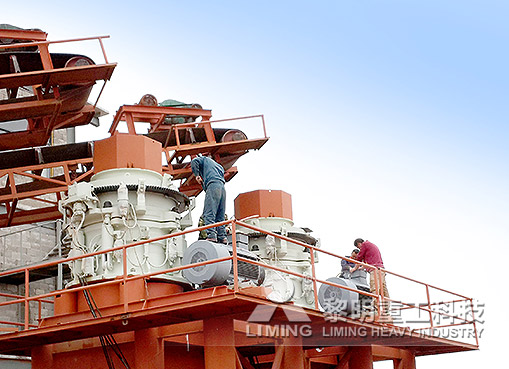
Breakthrough in basalt sand production: highly efficient technology leads to a new revolution in the sand and gravel industry.
In the sand and gravel industry, crushing and producing sand from hard rocks such as basalt and granite has always been a challenging task. Traditional crushing methods often suffer from rapid equipment wear, low productivity, and poor sand quality. However, thanks to technological advancements and innovations, this problem has been successfully addressed, leading to the creation of a highly efficient, cost-effective, and high-quality basalt sand production process.
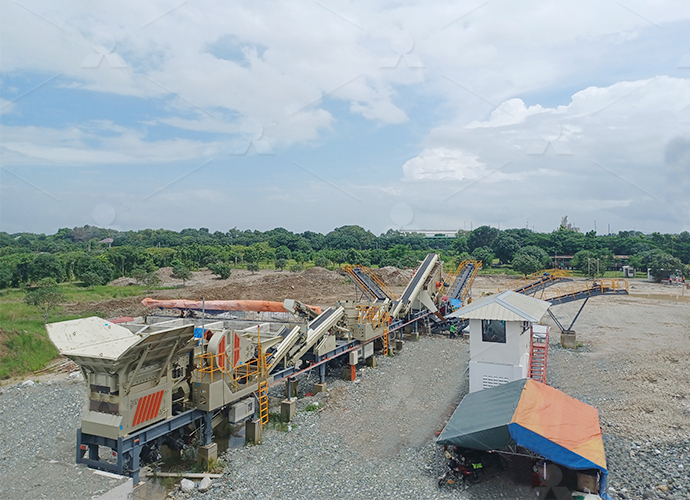
Basalt Sand and Gravel Crushing Production Line
I. Obstacles to Basalt Sand Production
Basalt is known for its high compressive strength, impact toughness, and hardness, making it difficult to process using traditional crushing equipment. The crushing process causes significant wear and tear on the equipment, requiring frequent replacements, and the productivity often falls short of design requirements. Furthermore, the shape of the grains after crushing basalt is unsatisfactory: a high content of needle-shaped and flaky particles, as well as a high fineness modulus, which affects the quality and price of the sand and gravel.
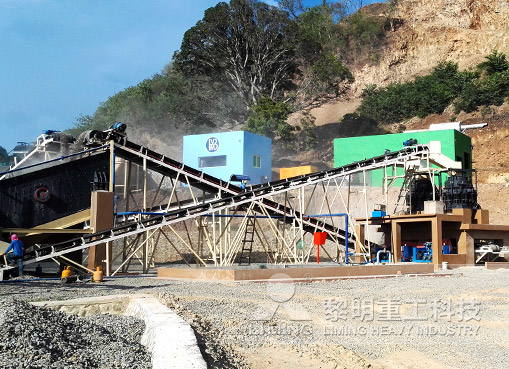
II. Innovative Technologies to Solve the Problems
To address the various problems associated with basalt sand production, an advanced process of "four-stage crushing, combined sand production using a vertical shaft impact crusher and a rod mill" is employed. Through rational equipment configuration and process design, the goal of highly efficient, cost-effective, and high-quality sand production has been successfully achieved.
1. Equipment Selection and Configuration: Suitable equipment was selected for crushing and sand production, taking into account the characteristics of basalt. The optimized equipment selection ensured that the actual production capacity was close to the theoretical capacity, while simultaneously reducing equipment wear and the frequency of replacement.
2. Control of the Particle Shape of the Finished Aggregate: To improve the quality of the particle shape of the crushed basalt aggregate, measures such as controlling the degree of crushing through medium and fine crushing, continuous crushing, full-load feeding, and layered crushing were adopted. Simultaneously, shaping measures were implemented to ensure that the particle shape of the finished aggregate met the specified characteristics.
3. Control of Sand Yield, Fineness Modulus, and Stone Dust Content: To address the problems of low sand yield, high fineness modulus, and low stone dust content in basalt sand production, measures such as increasing the rotor speed of the vertical shaft impact crusher and adjusting the feed particle size distribution were adopted. In addition, a rod mill was used for further crushing of aggregates<5 mm, which allowed for adjustment of the fineness modulus and stone dust content in the finished material.
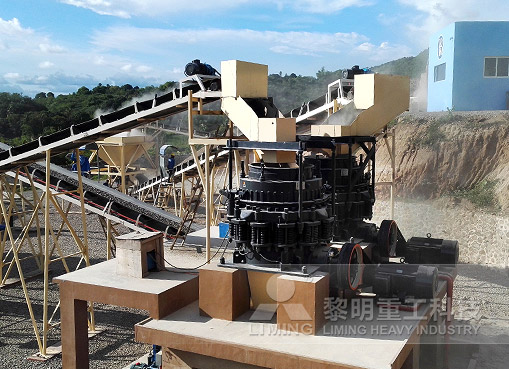
III. Actual Operating Results
Through actual operational testing, the basalt sand production process achieved significant results. The actual performance of the equipment in each crushing plant reached the planned targets, the content of needle-shaped and flaky fractions in the finished aggregate met the technical requirements, and the yield of finished sand and the fineness modulus of the vertical shaft impact crusher met the standards for high-quality sand and gravel.
IV. Future Prospects
In the future, we will continue to optimize the basalt sand production process and constantly improve the level of automation and intelligence of the equipment. We also pay special attention to environmental protection and energy saving, striving to create an environmentally friendly, low-carbon, and efficient sand and gravel production line. We are confident that in the near future, the basalt sand production process will open up new prospects for development.

-
-
What are the advantages of the Shibang MK modular mobile crushing and screening plant?
-
-
-
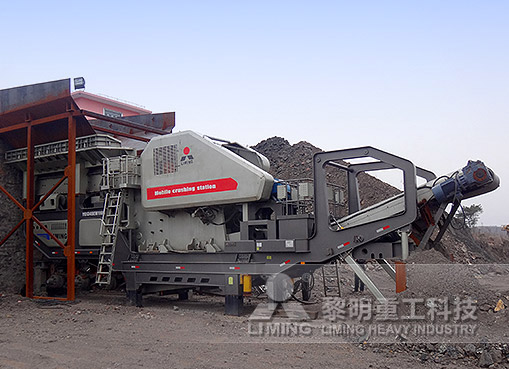
A complex for crushing and processing manganese ore with a daily capacity of 4000 tons.