How to Effectively Control the Quality of Finished Products in a Sand and Aggregate Production Line
How can the quality of finished products be effectively controlled during the production of sand and gravel aggregates? The following methods are offered for your reference:
Click to inquire about sand and gravel aggregate production line configuration plans.
**Controlling Particle Size**
The production process for manufactured sand and gravel aggregates involves several stages, including crushing, screening, and sand making. Among these, the screening stage is the critical step for controlling the particle size of the aggregates. To ensure that the aggregate quality meets the specific particle size and gradation requirements for concrete aggregates, it is essential to utilize advanced, proven crushing equipment, vibrating screens, and sieves with standard mesh apertures. This ensures that the resulting concrete aggregates comply with the grading quality standards and regulations established by relevant specifications. Simply put, quality control in the production of manufactured aggregates relies primarily on the effective operation of the screening stage, as well as the use of appropriate equipment and sieves to guarantee that the final aggregates satisfy all regulatory requirements.
**Controlling Clay Content**
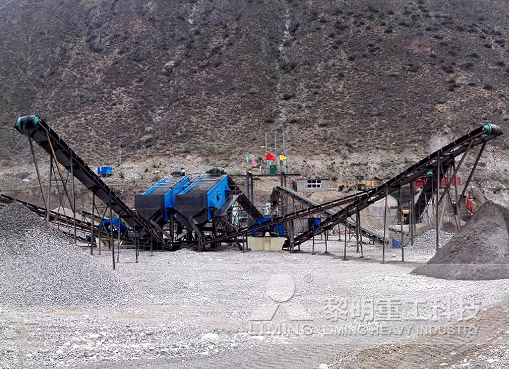
To ensure the effective operation of the screening equipment, it is necessary to precisely control its inclination angle while strictly regulating the volume of raw materials fed onto the screen. To meet this requirement, installing a stable and reliable washing system is essential. This washing system must be capable of supplying water at a rate of 100 to 120 cubic meters per hour and should be equipped with a main water supply pipe with a diameter of 100 millimeters.
The water pipes utilized directly on the screening machine should have a diameter of 60 millimeters, and the spacing between these pipes on the equipment should be maintained within a range of 25 to 35 millimeters. The branch pipes supplying water to these main pipes should have diameters ranging from 5 to 8 millimeters. When arranging these supply branch pipes, care must be taken to ensure that the spray nozzles are distributed uniformly, and the water pressure should be adjusted to an appropriate level during the washing process.
**Protecting Finished Aggregates**
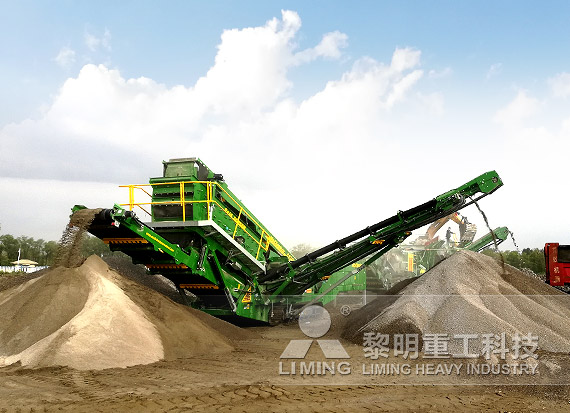
After passing through the screening workshop, sand and gravel aggregates are transported via conveyor belts to the finished product stockpile yard. Here, partition walls should be erected to create separate storage zones, thereby preventing the intermingling of different types of aggregates. To facilitate easy identification and management, product signage should be installed at each stockpile location. Furthermore, to maintain an organized and orderly storage environment—in areas where no partition walls are used—a minimum spacing of 3 meters should be maintained between adjacent stockpiles of aggregates.
Finally, to ensure that the aggregates meet the specific moisture content requirements for concrete production, a blind ditch drainage system should be constructed within the finished product stockpile yard. In this way, after being rinsed, the aggregates entering the stockpile can dewater rapidly, ensuring that the moisture content of the aggregates used for concrete production meets the required specifications.

-
Coal Gangue Sand-Making Production Process and Equipment Selection
-
-
Myanmar Metal Ore Processing Solutions – 500TPH Antimony Crushing Plant & More
-
Philippines Aggregate & River Pebble Crushing Solutions – For Construction & Infrastructure
-
Vietnam Tungsten Ore Processing – 120TPH Production Line & Custom Mining Solutions