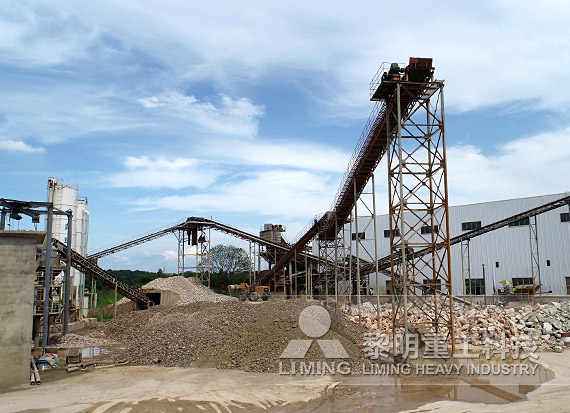
Reasons for material backflow in jaw crushers in stone production lines and their solutions.
What causes material to be ejected back from the jaw crusher during operation? How to solve it?
Reasons Analysis
1. Problems with the equipment itself
The dimensions of the jaw crusher parts do not match the drawings, resulting in poor mechanical quality. After long-term use, the angle between the two jaw plates becomes too large, exceeding twice the friction angle. The friction force between the material and the jaw plates is insufficient to overcome the upward component of the crushing force. Therefore, the material is squeezed out under the action of the vertical upward force, sliding towards the feed opening, affecting the crushing effect. The dimensions of the parts need to be corrected in time to ensure mechanical performance.
Jaw Crusher Purchase Consultation
2. Uneven force on the crushed material
Under the upward and downward forces of the movable jaw plate, the force on the material in the crushing chamber in the vertical direction may be unbalanced. When the upward component force is dominant, the material is easily affected by this force, leading to the phenomenon of material ejection, i.e., the material is not effectively crushed but squeezed out and slides towards the feed opening. Therefore, ensuring the balance and stability of the jaw plate operation is key to preventing material ejection.
3. Excessive discharge opening width
Many people outside the industry believe that the wider the discharge opening of the jaw crusher, the better. In fact, for the same specification of jaw crusher, the wider the discharge opening, the more likely it is to experience material ejection. During the crushing process, the material is in direct contact with the jaw plates, generating friction. The more severely the jaw plates are worn, the greater the possibility of material ejection.
4. Large size difference in the material to be crushed
Generally, the feed size of a jaw crusher is similar to ensure uniform feeding. However, when the size difference of the material to be crushed is very large, material ejection is likely to occur.
Solutions
1. Use a crusher of appropriate specifications according to the material characteristics.
2. When material ejection occurs due to jaw plate wear, the jaw plates should be repaired or replaced promptly.
3. When the particle size difference of the material is too large, screening should be performed. A coarse jaw crusher should be used for pre-processing, and then a fine jaw crusher should be used for fine processing to meet the material processing requirements.
4. Add a wedge-shaped shim at the joint surface of the movable jaw and the movable jaw plate to reduce the angle between the two jaw plates, so that the angle between the two jaw plates is less than twice the friction angle, eliminating the material ejection phenomenon. 5. A protective plate can be welded above the jaw crusher's feed opening to prevent material from flying out and endangering the safety of the operator.

-
Which parts of an impact crusher should be inspected regularly after prolonged operation?
-
What are the requirements for materials when using an impact crusher?
-
-
Should wet or dry methods be used in the sand production process?
-
What are the differences between jaw crushers and impact crushers in a stone production line?