Single-Cylinder Hydraulic Cone Crusher: The Key to Selection—Making Aggregate Production More Efficient
The single-cylinder hydraulic cone crusher is a relatively modern type of cone crusher, distinguished by two primary features: a single hydraulic cylinder and hydraulic operation. It utilizes a single hydraulic cylinder as a safety mechanism; with the main shaft supported at both its upper and lower ends, the machine is capable of withstanding greater crushing forces and longer strokes. Furthermore, it employs the principle of laminated crushing—a method that yields an ideal product shape and accommodates a wide range of particle size requirements.
Selecting the right cone crusher can often be a headache for mine operators. However, by understanding the specific characteristics of the single-cylinder hydraulic cone crusher, you can make a well-informed decision. Anhui Mining Machinery advises that, once you have mastered this knowledge, you will find it effortless to select the cone crusher best suited to your needs!
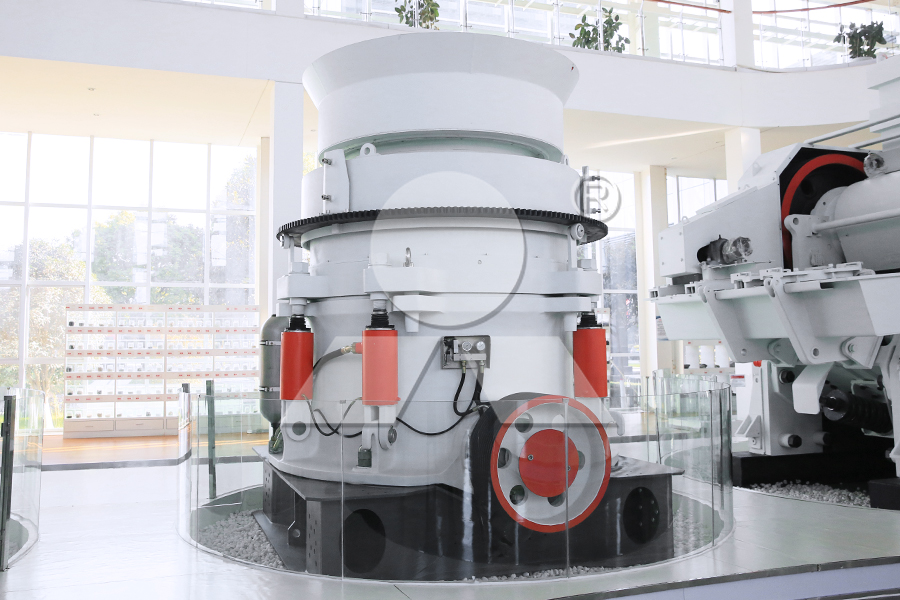
The single-cylinder hydraulic cone crusher is widely utilized in medium, fine, and ultra-fine crushing operations, making it the preferred choice for the secondary and tertiary crushing stages in mining and aggregate production lines. It is capable of performing medium and fine crushing on materials of medium-to-high hardness—such as iron ore, copper ore, granite, basalt, pebbles, marble, and limestone. Compared to multi-cylinder hydraulic cone crushers, the single-cylinder model features a simpler body structure with fewer components; it boasts a more streamlined design, is structurally less complex, and entails lower manufacturing costs—resulting in a relatively more affordable price point.
The operational process of the single-cylinder hydraulic cone crusher begins with an electric motor driving a V-belt, which in turn drives the transmission mechanism. As the stationary cone and the moving cone rotate continuously, raw materials fed from above enter the space between them, where they are crushed through a combination of compression and grinding. The inner cone oscillates back and forth within the crushing chamber while simultaneously rotating slowly. Should an uncrushable object (such as tramp iron) enter the crushing chamber, the moving cone—supported by a hydraulic piston at its base—is lifted upward; this mechanism serves the dual purpose of adjusting the discharge opening and providing effective "tramp iron" protection.
By employing a unique crushing chamber profile and the principle of laminated crushing, the single-cylinder hydraulic cone crusher generates inter-particle crushing forces. This process significantly increases the proportion of cubical particles in the final product while reducing the quantity of flaky or needle-like stones, thereby ensuring a more uniform particle size distribution. In terms of practical application, the equipment is designed for ease of installation and maintenance. Furthermore, the single-cylinder hydraulic cone crusher features technical enhancements to its sliding bearings. These improvements enable the equipment to accommodate higher rotational speeds and increase the oscillation rate of the main shaft, thereby ensuring that the size specifications of the finished product more closely meet requirements while simultaneously boosting overall output.
The single-cylinder hydraulic cone crusher is currently one of the most widely utilized types of crushers, characterized by its low power consumption and high production capacity. It plays a pivotal role in large-scale production lines.

-
Introduction to the Process Flow and Required Equipment for Granite Crushing Production Lines
-
Introduction to the Process Flow and Required Equipment for Granite Crushing Production Lines
-
-
-